


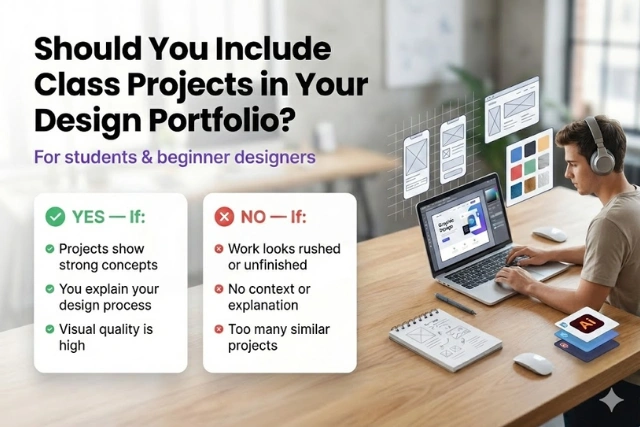
When building a graphic design portfolio, many aspiring designers ask themselves, Should I Include Class Projects on Graphic Design Portfolio? It’s a valid question, especially for students or those just starting out in the field. While class projects may not have the same real-world application as professional work, they still offer a valuable opportunity to showcase your skills, creativity, and growth as a designer.
In this article, we’ll explore the advantages and challenges of including class projects in your graphic design portfolio, and offer tips on how to make these projects shine. Let’s dive into why including your academic work can still make an impact on potential employers or clients.
You might be interested in learning about what degrees go good with graphic design? We have made an informative article on this topic as well.
Should I Include Class Projects on Graphic Design Portfolio for Freelance and Agency Work?
Including class projects in your graphic design portfolio can be beneficial for several reasons. While they may not always reflect real-world experiences, they still offer a platform for you to demonstrate key design skills and showcase your potential.
1. Demonstrates Your Design Skills
Even though class projects are academic assignments, they still provide an opportunity to display your design skills. Whether it’s logo design, web design, or branding, these projects demonstrate your ability to think creatively, solve design problems, and apply design principles.
These assignments are typically done under certain guidelines, deadlines, and sometimes client-like requirements, which can parallel real-world work situations. Class projects often push you to meet expectations while still allowing room for creativity, which can be appealing to employers.
2. Shows Growth and Learning
For early-stage designers, class projects can be a way to show growth over time. They can highlight the progression of your design knowledge, from simpler concepts to more complex and refined work. This demonstrates to potential clients or employers that you are continually improving your skills and adapting to new design trends or tools.
You can use these projects to show how your skills have evolved over time and how you are learning new techniques or refining existing ones. It can be a great way to prove your dedication to becoming a better designer.
3. Fills Gaps in Your Portfolio
If you’re just starting out and don’t yet have much professional experience, class projects can help fill the gaps in your portfolio. Clients or employers will understand that you may not have a large amount of work experience, and academic projects are an acceptable alternative. These projects can help you start building a portfolio that reflects your potential.
The Cons of Including Class Projects in Your Portfolio
While there are benefits to including class projects, there are also some challenges. It’s essential to be mindful of these potential drawbacks when deciding whether or not to feature academic work in your portfolio.
1. Lack of Real-World Experience
One downside is that class projects often lack the complexity and context of real-world design work. Clients and employers often prefer to see projects that are created in response to actual briefs, with specific client needs and objectives. Without this real-world application, class projects may seem less impressive in comparison.
2. Could Appear Amateurish
Class projects are often done in a short amount of time, sometimes under tight deadlines. If not refined and presented well, these projects can appear rushed or unfinished. In contrast, real-world projects usually have more time and resources behind them, which often leads to a more polished final product. If your class projects are included in your portfolio, make sure to take the time to make them look as professional as possible.
3. Limited Scope for Creativity
Class projects are often based on specific requirements set by the instructor. These assignments may limit your creative freedom, which can make it harder to showcase your innovation or personal style. Clients may want to see your ability to think outside the box, something that is sometimes restricted by academic guidelines.
How to Make Class Projects Stand Out in Your Portfolio
If you decide to include class projects in your portfolio, it’s essential to present them in the best possible light. Here are some tips to help you make the most of your academic work:
1. Showcase Your Process
Employers or clients are often more interested in your design process than just the final result. For each class project, consider including a breakdown of your creative journey. This can include initial sketches, mood boards, wireframes, and the final outcome. Demonstrating how you approached the project can help others understand your problem-solving skills and how you work through design challenges.
Tip: If you worked on a branding project, for example, include details about your concept development, color choices, typography selection, and how you tailored the design to meet the project’s objectives.
2. Polish the Final Project
It’s crucial to present your class projects as polished and professional work. Spend time refining your designs after the assignment has been completed. You can update them with new tools, fonts, or design techniques that are trending in the industry. Additionally, try to incorporate mockups to give the designs a realistic and professional appearance.
Tip: Use high-quality mockups for print, web, or logo designs to show how your work would appear in real-world settings, like business cards, websites, or billboards.
3. Be Selective
Don’t feel the need to include every class project you’ve ever completed. Select the ones that showcase your best skills and align with the type of work you want to do professionally. If you’re aiming to be a UX/UI designer, for example, focus on class projects that reflect your knowledge of user-centered design.
Tip: If your portfolio is starting to feel cluttered with too many class projects, it may be better to focus on only a few high-quality pieces that showcase your abilities
Conclusion
Should I Include Class Projects on Graphic Design Portfolio depends on experience level and the quality of the work. For students and early-career designers, these projects can serve as a valuable starting point for building a strong portfolio. By carefully selecting the best projects, polishing them, and showcasing your design process, you can turn even academic work into a professional asset.
If you follow these guidelines, you’ll be well on your way to creating a portfolio that highlights your talent, creativity, and growth as a graphic designer.
Frequently Asked Questions (FAQs)
1. How many class projects should I include in my portfolio?
It’s recommended to include a small selection of your best work, typically 3-5 class projects. This allows you to demonstrate a variety of skills without overwhelming your portfolio. Quality over quantity is key.
2. Can I include group class projects in my portfolio?
Yes, but be sure to highlight your specific contribution to the project. Employers want to see what you specifically did in a group setting, so make it clear how you played a role in the design process.
3. Should I include projects that don’t fully match my style or goals?
If a class project doesn’t match the type of work you want to pursue professionally, it may not be the best fit for your portfolio. Focus on projects that reflect your ideal career path and target audience.
4. How can I make my class projects more impressive?
You can make your class projects more impressive by refining them post-completion. Polish the designs, create mockups, and add context to demonstrate your design process and the challenges you overcame.
5. Will class projects help me get a job as a graphic designer?
Class projects can be helpful, especially if you don’t have professional experience. While real-world projects are often preferred, academic work can still show your skills, creativity, and potential. Just make sure to present them in the best possible way.