

Written by the ProTechMagazine Content Team | Reviewed by Deepu Thakur, Technology Enthusiast, protechmagazine.com | Last updated: July 2026
Quick Answer:
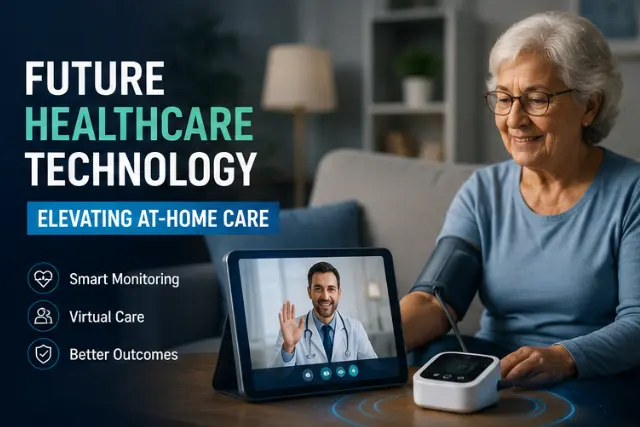
Future healthcare technology is transforming at-home care through remote patient monitoring, artificial intelligence, telemedicine, the Internet of Medical Things (IoMT), and smart home healthcare devices. These technologies improve patient monitoring, reduce hospital visits, lower healthcare costs, and make medical care more accessible from home.
Today, we are one of the largest industries transforming! For decades hospitals and private medical practices are the only ones that provide medical treatment to the patient. While the advancements in the future healthcare technology have brought them within homes as we talk today about patient monitoring, Telemedicine, Artificial intelligence and Smart medical devices will have an impact in future.
Home care service for the patient, care providers and hospitals have become very popular choices.
If you are very much inquisitive how future healthcare technology is elevating at-home care, here is this guidance:
What is At-Home Care in Modern Healthcare?
At- Home care is medical assistance that takes place in your own home rather than the hospital or the office. Home care used to simply mean a nurse at your house, perhaps providing post-rehab support, delivering medication and helping with day-to-day life support. But thanks to technological advancements, today home care goes far beyond just physical help.
It means keeping people home with home healthcare technology that monitor, and support patients to stay in their home even with an acute issue or a chronic illness.
Why Home-Based Healthcare Is Growing Rapidly
Healthcare is shifting from hospitals to homes because of advances in technology, changing patient expectations, and rising healthcare costs. The factors below explain why home-based care is becoming an essential part of modern healthcare. Several factors are driving the growth of the home healthcare industry:
Aging Population
Due to the rapidly aging population, long-term care has become a request, and more seniors desire to stay in their homes rather than enter nursing facilities.
Rising Healthcare Costs
Medical Expenditure growth and Hospitalizations and long treatment periods for those requiring continued care become increasingly costly, and technologically advanced solutions can lower costs while preserving treatment quality.
Increase in Chronic Diseases
Rise in chronic conditions including diseases such as diabetes, hypertension, heart disease, and respiratory ailments that need sustained attention and ongoing maintenance,at-home treatment care is an excellent choice.
Evolution of Patient Demand
Patients nowadays want more adaptable and conveniently delivered treatment options; in-home healthcare directly addresses these desires. These elements contribute to the considerable growth of the home healthcare market.
How Future Healthcare Technology Is Elevating At-Home Care
Several emerging technologies are making home healthcare more connected, efficient, and personalized. Together, these innovations are helping patients receive high-quality care without frequent hospital visits. The combination of digital healthcare solutions and connected medical devices is revolutionizing patient care. Here are the key technologies driving this transformation.
| Technology | Primary Benefit | Common Use |
| Remote Patient Monitoring | Continuous monitoring | Chronic disease management |
| Artificial Intelligence | Predictive insights | Personalized treatment |
| Telemedicine | Remote consultations | Virtual doctor visits |
| IoMT | Connected devices | Real-time health tracking |
| Smart Home Technology | Independent living | Elderly care |
1. Remote Patient Monitoring (RPM)
One of the most impactful innovations in future healthcare technology is Remote Patient Monitoring (RPM).
RPM enables healthcare providers to track patient health remotely using connected devices that collect and transmit real-time health data. These connected systems are part of the growing IoT ecosystem, making it useful to understand how IoT devices can be accessed and managed remotely.
Examples of RPM Devices
- Smart blood pressure monitors
- Continuous glucose monitors
- Wearable heart monitors
- Pulse oximeters
- Smart scales
Benefits of RPM
- Early detection of health issues
- Reduced hospital readmissions
- Better chronic disease management
- Improved patient engagement
- Continuous monitoring between appointments
RPM is becoming a cornerstone of the future of home healthcare because it enables proactive care rather than reactive treatment.
2. Artificial Intelligence in Home Healthcare
Artificial Intelligence is transforming how healthcare professionals analyze patient information and make clinical decisions.
AI systems can process large volumes of health data from wearables, sensors, and electronic health records to identify trends and predict potential complications.
How AI is Improving Home Care
Predictive Analytics
AI can identify subtle changes in patient health before symptoms become severe, enabling early intervention.
Personalized Care Plans
Healthcare providers can create treatment strategies tailored to individual patient needs and behaviors.
Virtual Health Assistants
AI-powered assistants help patients:
- Remember medications
- Schedule appointments
- Monitor symptoms
- Follow treatment plans
As AI continues to evolve, it will play a major role in shaping the future of healthcare technology. If you’re new to AI concepts, learning how artificial intelligence solves complex problems can help you understand why it’s becoming essential in modern healthcare.
3. Telemedicine and Virtual Healthcare
The rapid adoption of telemedicine is one of the most significant healthcare industry trends of recent years.
Telemedicine allows patients to consult doctors, specialists, therapists, and healthcare providers remotely using digital platforms.
Telemedicine continues to expand globally, supported by advancements in digital healthcare and remote consultations. You can learn more through the World Health Organization’s digital health resources.
Advantages of Telemedicine
- Reduced travel time
- Faster access to specialists
- Lower healthcare costs
- Improved convenience
- Enhanced continuity of care
Future of Telehealth
Experts predict that the future of telehealth will include AI-assisted consultations, remote diagnostics, and integrated virtual healthcare ecosystems.
Telemedicine is helping bridge healthcare accessibility gaps while improving patient satisfaction.
4. Internet of Medical Things (IoMT)
The Internet of Medical Things (IoMT) refers to a network of connected healthcare devices that collect, analyze, and exchange patient data.
Common IoMT Devices
- Smart insulin pumps
- Connected inhalers
- Wearable ECG monitors
- Smart medication dispensers
- Remote cardiac monitoring systems
These devices enable real-time communication between patients and healthcare providers, supporting more informed medical decisions.
As IoMT adoption increases, it will become a critical component of connected healthcare and modern home care services. If you’d like to explore this technology further, here’s a detailed guide on why Raspberry Pi is widely used for IoT projects.
5. Smart Home Healthcare Technology
The future of home care extends beyond wearable devices.
Smart homes are increasingly integrating healthcare technologies that monitor patient well-being while remaining largely invisible in daily life.
Examples Include
- Fall detection sensors
- Smart medication reminders
- Voice-enabled healthcare assistants
- Motion tracking systems
- Emergency response technologies
These innovations support safer independent living, particularly for elderly individuals and patients with chronic conditions.
Benefits of Future Healthcare Technology in At-Home Care
Elderly Care and Assisted Living : Remote monitoring of vitals and daily routines assist caregivers to assess risks before emergent events occur. Post – Surgical Recovery Patients recovering from surgery can be monitored, improving hospital utilization and the quality of their recovery. Management of Chronic Health Conditions Diabetes, COPD, and heart diseases are easier to manage via connectedness with medical care. Mental health support The increase of accessible virtual care provides comfort and relief for mental, behavioural Health concerns through connected technologies
Real-World Use Cases of Home Healthcare Technology
These technologies are already improving healthcare across different patient groups. The following examples show how connected healthcare is making a practical difference in everyday life.
Elderly Care and Assisted Living
Remote monitoring of vitals and daily routines assist caregivers to assess risks before emergent events occur.
Post – Surgical Recovery
Patients recovering from surgery can be monitored, improving hospital utilization and the quality of their recovery.
Management of Chronic Health Conditions
Diabetes, COPD, and heart diseases are easier to manage via connectedness with medical care.
Mental health support
The increase of accessible virtual care provides comfort and relief for mental, behavioural Health concerns through connected technologies
Challenges Facing the Home Healthcare Industry
The future for this field is exciting but challenges may need to be overcome.
Data Security and Privacy
With increasing digitization in healthcare, the security of patients’ private information is important. Protecting healthcare data requires strong security practices and compliance with privacy regulations. The U.S. Department of Health & Human Services provides detailed guidance on safeguarding health information.
Technology Adoption
Many patients may be unwilling or unable to take to the new technologies, and the elderly may not be able to handle new digital health practices.
Legacy Technology
Healthcare organizations may also run into the problem of integrating new health technology solutions with existing technology infrastructures in the healthcare system.
Data Protection Regulations
The industry should keep up to date with all of the newest healthcare data and protection laws.
These are just some of the roadblocks and areas to watch for in home healthcare’s bright future.
Future Healthcare Trends Transforming Home Care
Healthcare technology continues to evolve rapidly. These trends are expected to play a major role in shaping how medical services are delivered over the next decade. Here are 5 tech trends likely to reshape healthcare delivery in the next ten years.
Health prediction system
More enhanced forecasting models will detect the risk of diseases even prior to the onset of illness symptoms.
Remote Patient Management System
Wearable devices with smarter functionality that collect more specific and in depth health data of patients.
Household Automation
Home smart ecosystems integrate health data and are in support of better connected healthcare.
Individualized Healthcare
Tailoring treatment protocols with patient data collected and AI.
The trends in healthcare technology will push the transition from hospital-centric care to healthcare at home.
The Future of Home Healthcare
The future of healthcare is becoming increasingly decentralized.
Instead of being offered solely in hospitals and clinics, healthcare will begin to reach patients where they feel most comfortable and empowered: right in their homes. This ideal future will become possible through the increasing development and implementation of cutting-edge technologies such as AI,IoMT, digital health platforms,telemedicine, all within the scope of modern medicine.
The future is clear: technology will revolutionize at-home care to make it more smarter, predictive, and individualized, leading to lower costs and better health.
Conclusion
Wondering exactly how future healthcare technology is elevating at-home care? These will explain exactly how at home care is fast moving itself into the foundation of modern healthcare. Remote patient tracking technology, machine intelligence, telemedicine as well as home healthcare technologies that may give you greater convenience and also bring about better clinical results.
As technology changes how health care can be carried out, the long run of modern health care is connected and focused around you; care you can get each time and everywhere that you may require it.
Frequently Asked Questions
What is future healthcare technology?
Future healthcare technology refers to advanced digital solutions such as artificial intelligence (AI), telemedicine, remote patient monitoring (RPM), the Internet of Medical Things (IoMT), and smart medical devices that improve patient care both at home and in healthcare facilities.
How is technology improving at-home healthcare?
Technology improves at-home healthcare by enabling remote patient monitoring, virtual doctor consultations, AI-assisted diagnosis, smart medical devices, and real-time health tracking. These innovations reduce hospital visits while helping patients receive continuous care from home.
What is Remote Patient Monitoring (RPM)?
Remote Patient Monitoring (RPM) is a healthcare system that uses connected medical devices to collect and transmit a patient’s health data, allowing healthcare providers to monitor conditions remotely and respond quickly when needed.
What is the Internet of Medical Things (IoMT)?
The Internet of Medical Things (IoMT) is a network of connected medical devices, sensors, and healthcare applications that collect, share, and analyze patient health data to improve diagnosis, treatment, and remote care.
How does artificial intelligence help in home healthcare?
Artificial intelligence helps by analyzing patient data, predicting health risks, creating personalized treatment plans, supporting virtual health assistants, and assisting healthcare professionals in making faster, more informed decisions.